
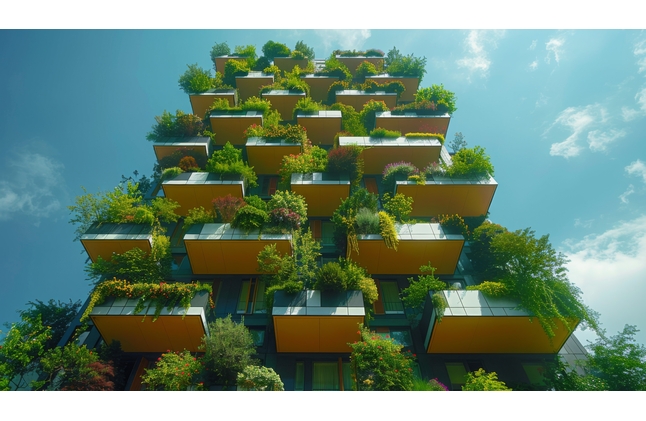
The Art of Designing with the Sky in View
Step outside in Helsinki or Singapore, or Marrakesh—and the buildings will feel different before you’ve even registered it. Perhaps the walls are thick and windowless, or perhaps they exhale through verandas as wide as they are deep. This is not culture or material tradition at play—this is climate, programmed into architecture like a second skin.
For millennia, builders have responded to the elements not with resistance, but with adaptation. Climate—sun, wind, rain, and temperature—has long dictated the shape, orientation, and soul of a building. In an age of global warming and high-tech solutions, it’s worth remembering: the oldest innovations were born from weather.
Let’s take a journey through climates and continents to see how climate shapes style—and what it still teaches us.
1. Hot and Dry: The Desert as a Designer
Examples: Middle East, North Africa, Southwestern US
The Challenge: Very intense sun, limited water, radical temperature fluctuations.
Architectural Response: Resist and store.
- Thick Walls: Adobe, mud brick, or stone—thick materials that absorb heat during the day and release it at night.
- Few Openings: Small windows minimize solar gain and sand invasion.
- Courtyards: Interior shaded areas that provide microclimates, cool the air, and provide privacy.
- Wind Catchers (Badgirs): Tower structures that direct cool winds inside buildings.
Architectural Story: The desert is unforgiving. Architecture here listens intently: to the direction of the wind, the inclination of the sun, and the quietness of the ground.
Modern Echoes: Sustainable design passive cooling techniques, solar orientation, and thermal mass in green buildings.
2. Hot and Humid: Where Architecture Breathes
Examples: Southeast Asia, Amazon Basin, Central Africa
The Challenge: Heavy rain, high humidity, and unrelenting heat.
Architectural Response: Float and breathe to build.
- Light Materials: Timber, thatch, bamboo—all of which dry and cool quickly.
- Elevated Floors: Stilted to avoid floodwaters, encourage airflow, and repel pests.
- Overhanging Roofs: Deep eaves or steeply pitched roofs to shed water rapidly and produce shaded perimeters.
- Permeable Walls: Louvers, perforated screens, or open frames to facilitate cross ventilation.
Architectural Story: These buildings don’t shut themselves off—they open up, flutter, and filter. They are in conversation with the rain, not defence against it.
Modern Echoes: Bioclimatic facades, double-skin buildings, and the re-introduction of vernacular passive cooling strategies.
3. Cold and Harsh: Chiselling Shelter from Snow and Ice
Examples: Scandinavia, Siberia, the Alps, Northern Canada
The Challenge: Low temperatures, snow load, limited daylight.
Architectural Response: Build to retain and protect.
- Compact Forms: Reduced surface areas reduce heat loss.
- High-Pitched Roofs: Angle to shed snow rapidly to avoid collapse.
- Insulation Layers: Thick walls, double glazing, and air-tight construction.
- Small Windows: Retain heat and reduce thermal bridging.
Architectural Story: Where the sun disappears for months, buildings turn into firelit shelters—warm dens, huddled and human, huddled and human.
Modern Echoes: Super-insulated houses, Passive House principles, and earth-sheltered design.
4. Temperate and Mild: The Portico’s Birthplace
Examples: Mediterranean, California, South Australia
The Challenge: Seasonal diversity, moderate climate, sea breezes.
Architectural Response: Design to transition and adjust.
- Transitional Spaces: Loggias, verandas, patios, and colonnades that bridge indoors and outdoors.
- Cross Ventilation: Strategically located windows and openings to provide air flow.
- Stone and Tile: Materials that control indoor climate, remaining cool in summer and warm in winter.
- Shutters and Awnings: Passive shading devices reacting to daily and seasonal variations.
Architectural Story: These buildings are theatrical—designed for golden light, long shadows, and life lived in the in-between.
Modern Echoes: Indoor-outdoor living, operable shading systems, climate-responsive facades.
5. Extreme and Unpredictable: Architecture in the Age of Chaos
Examples: Coastal cities, monsoon regions, seismic zones
The Challenge: Hurricanes, typhoons, earthquakes, floods.
Architectural Response: Build to flex, float, and fail safely.
- Flexible Structures: Seismic isolation systems, kinetic joints, and lightweight roofs.
- Raising Foundations: Buildings in flood-prone areas are raised or made amphibious.
- Aerodynamic Shapes: Aerodynamic shapes to deflect wind and minimize uplift in storm areas.
- Emergency Recovery: Redundancy of systems and modular elements for disaster recovery.
Architectural Story: When nature is unpredictable, buildings have to dance, to yield, and to survive with elegance.
Modern Echoes: Resilient city planning, disaster-resistant building codes, climate-responsive architecture.
The New Climate Order: What Architects Need to Ask Now
We are no longer building for climate zones—we are building for climate change. The weather is no longer predictable. Seasons no longer behave like clockwork. The lessons of traditional architecture are timelier than ever.
- Can we build buildings that heal the land instead of devouring it?
- Can vernacular wisdom inform our high-tech futures?
- Can form follow climate—and still delight the eye?
Conclusion: Weathering Beauty
The climate has forever been the unseen hand behind great design. The Parthenon is positioned in harmony with the sun. The windmills of Mykonos turn to the wind. The igloo entraps warmth within ice. Even the most majestic cathedrals followed the elements.
To design with the climate is not a limitation—it’s an invitation. To design against it is hubris. The structures that last are not those that conquer nature, but those that communicate its language.
To the future generation of architects:
Make your materials sage. Make your walls breathe. Make your roofs listen. And have your sky as your oldest collaborator.