
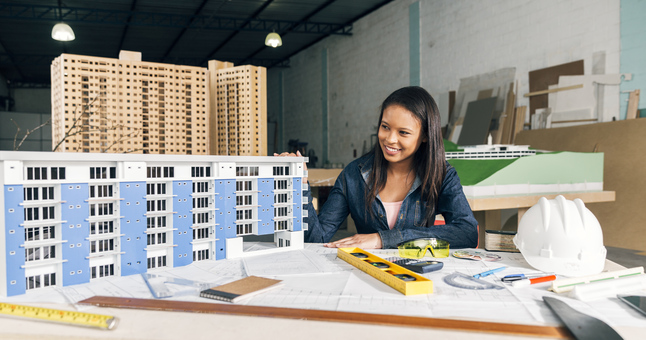
Architecture is a mirror — and for centuries, it reflected a world that largely omitted women. But today, that reflection is shifting.
From anonymous creators of ancient buildings to daring modern-day visionaries, women have been quietly designing our built environment much longer than most history books acknowledge. Unravelling the layers of stone, steel, and glass, a more nuanced story becomes apparent — one in which women are no longer footnotes, but foundational forces.
Foundations Hidden in History
Prior to the existence of the formal profession of architecture, women had already been engaged in building and design — from religious temples in Mesopotamia to early habitations in native societies. These roles were frequently unreported; their legacies laid to rest under patriarchal expectations.
Even in recent history, most women operated in the shadows of male partners or spouses. Consider Louise Bethune, the first woman to be hailed as a professional architect in America, who started drafting public libraries and schools in the late 1800s. Or Marion Mahony Griffin, one of the earliest licensed female architects in the world, whose exquisite drawings contributed to the Prairie School style — but was frequently overshadowed by her male partners.
Designing a Presence: The 20th Century and Beyond
When modernism gained traction, women started to stake more space in architectural education and practice. Challenges continued, however — ranging from unequal pay and lack of recognition to few opportunities for leadership.
A few emerged over the din with quiet brilliance, others with radical panache.
- Zaha Hadid broke literal and figurative ceilings with her weightless forms and bold attitude toward deconstructivism. She became the first solo female laureate in 2004, a watershed moment — it also won her a Pritzker Prize.
- Lina Bo Bardi brought social awareness to Brazilian architecture, combining brutalist shapes with the warmth of cultural identity.
- Denise Scott Brown, although co-author of seminal architectural texts and concepts, was famously snubbed in favour of her husband, Robert Venturi, when he won the Pritzker Prize in 1991.
These are not stories about buildings — they’re stories about women refusing to be cut out of their own blueprints.
Contemporary Forces: Architects of Change
Women today are reshaping the profession in ways that disrupt historical hierarchies and redefine the architect’s place in society.
- Tatiana Bilbao prioritizes sustainable, deeply local design rooted in Mexican culture and community requirements.
- Jeanne Gang, Studio Gang’s founder, not only creates celebrated towers such as Aqua in Chicago, but also civic landscapes that promote social contact.
- Yasmeen Lari, the first female architect in Pakistan, now constructs low-cost, climate-hardy shelters for poor communities.
These women — and countless others — are not merely contributing to the profession; they are redefining its values.
Challenges That Endure
Even with progress, gender equity in architecture is still a work in progress. Women remain underrepresented in positions of leadership and experience increased levels of burnout as a result of work-life imbalance and systemic discrimination.
Architecture still has to break down barriers surrounding:
- Recognition: Women’s work tends to go unrecognized or be attributed to male partners.
- Pay equity: An ongoing wage disparity exists between male and female architects globally.
- Leadership: Not enough women are at the helm of firms, academia, or high-profile commissions.
The Future is Collaborative
Architecture is enriched by diversity of thought, experience, and voice. A more inclusive profession is not only equitable — it’s more creatively robust.
- Create inclusive design team’s representative of the people they serve.
- Mentor and sponsor up-and-coming female architects from a range of backgrounds.
- Redesign architectural success — not only as famous buildings, but as fair impact.
Inspiring the Next Generation
To the young woman drawing city plans in her notebook, to the student working late in studio, to the rising designer cutting her teeth on her first job site: this is your place to make.
Your vision counts. Your voice is heard.
You’re not here to conform to architecture — you’re here to broaden it.
Key Takeaways
- Women have always been in architecture — history just didn’t always document them.
- Visionary women like Zaha Hadid, Lina Bo Bardi, and Jeanne Gang continue to push boundaries.
- Systemic change is still required for real equity in leadership, compensation, and visibility.
- The profession is stronger when it values gender diversity as a strength, not an addendum.
- Each woman who dreams of being an architect adds another line to a narrative that’s still in the making.
The future of architecture isn’t male or female. It’s human, equal and collective.
Let’s create that future together — one building, one studio, one strong narrative at a time.