
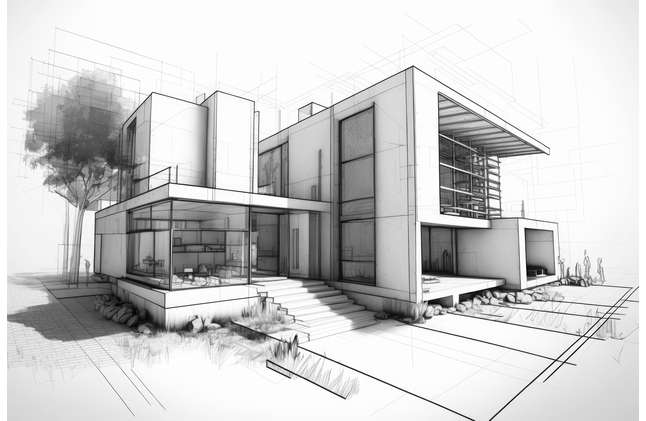
An architectural journey from quiet origins to refined modern living.
Minimalist design has been a potent counter-narrative to excess for centuries. It’s not about nothing, but about purity—eliminating the superfluous to allow the fundamental to shine. Its development over centuries is influenced by culture, technology, philosophy, and material innovation. What follows is a carefully curated look at how minimalist design has developed, changed, and evolved.
Origins in Simplicity and Spirituality
Minimalism may seem contemporary, but its soul is old. Ancient design traditions celebrated restraint not as form, but as thought.
- Japanese Zen buildings celebrated emptiness as dynamic presence. Shoji screens, rough wood, and sunlight encouraged introspection.
- Islamic and monastic architecture employed repetition, symmetry, and open courtyards to convey order, harmony, and spiritual intent.
- In these spaces of the past, minimalism was not about purposeful design—each element doing both job and emotion.
This underlying philosophy—emphasizing calmness, lightness, and natural materials—lay the groundwork for what would eventually evolve into modern minimalism.
Modernism and Structural Honesty of the 20th Century
The industrial revolution brought with it new materials—steel, glass, and reinforced concrete—coupled with a demand for effective, replicable design. This transformation formed the basis for minimalism as an architectural movement.
- Ludwig Mies van der Rohe revolutionized a minimalist design language, proclaiming “less is more.” His structures, like the Farnsworth House exemplify spatial clarity and material integrity.
- Le Corbusier emphasized proportion, order, and functionality, famously referring to the house as “a machine for living in.”
- Bauhaus architects and designers consolidated art, industry, and simplicity—eliminating ornament to expose intrinsic form.
This period took minimalism as a logical and intentional design strategy—motivated not by adornment, but by intentionality of construction and purpose.
Minimalism as Artistic and Cultural Movement
In the 1960s and 70s, minimalism spread to the visual arts, as a resistance to consumer society and visual saturation.
- Donald Judd and Agnes Martin used form, repetition, and precision—the values that have strong correspondence to architectural minimalism.
- In architecture, Tadao Ando reinterpreted spatial experience in terms of weight and light in material, building that were spiritual in their restraint.
Minimalism at this time came to be less about style and more about experience—the relationship between shadow, silence, proportion, and material.
The Digital Age and the Rise of Lifestyle Minimalism
As the world entered the digital age, the minimalist aesthetic was no longer just a design principle—it became a lifestyle reaction to overstimulation and clutter.
- Apple’s interface and product design opted for minimalism as clarity, focusing on simplicity and ease of use.
- Nordic and Scandinavian design aesthetics prioritized comfort through simplicity—soft materials, clean lines, neutral colour palettes.
- Architecture reacted with open-plan spaces, monochromatic colour schemes, and multi-use spaces that accommodated contemporary living while minimizing visual clutter.
Minimalism moved from high art and elite architecture to a universal language of design that is calm, balanced, and mindful.
Contemporary Minimalism: Contextual, Sustainable, Emotional
Today’s minimalism is more nuanced and human-centered. It respects place, culture, sustainability, and emotional resonance.
- Tatiana Bilbao incorporates minimalism with natural textures and regional context, creating architecture that is both essential and grounded.
- Studio Mumbai brings craft and climate into focus, combining minimalism with tactile materiality and local techniques.
- John Pawson’s work continues to refine minimalism as a sensory experience—spaces defined by proportion, shadow, and a quiet elegance.
Modern minimalism is more about intentional living—each space enhancing well-being, ecology, and cultural expression.
Minimalism Today: Clarity as Luxury
Minimalism now signifies a new type of luxury—the luxury of space, light, quiet, and unobstructed freedom. It poses basic questions:
- What is truly necessary?
- How does a room make us feel?
- Can simplicity enhance our senses?
In an era of environmental urgency and mental exhaustion, minimalistic design gives us more than beauty—it gives us clarity, sustainability, and stillness.
Conclusion: The Power of Restraint
The development of minimalistic design is a reflection of wider changes in the way we live, think, and construct. It has nothing to do with doing less for aesthetic reasons—it is about doing exactly what is required, with attention, purpose, and respect for context.
Minimalism, at its finest, is not void. It is whole.